In today’s fast-paced texting and online chatting culture, understanding abbreviations, slang, and nuanced words is more important than ever.
One word you may encounter frequently is “dramatic.” But what does it truly mean when someone uses it in a chat, a text, or on social media?
Whether you’re messaging friends, scrolling through Instagram comments, or reacting on TikTok, knowing the dramatic meaning can help you respond appropriately and avoid misunderstandings.
Updated 2026: The way people use “dramatic” online has evolved, and it’s now more than just a description—it can convey humor, exaggeration, or even subtle critique.
What Does “Dramatic” Mean? Definition & Origin:
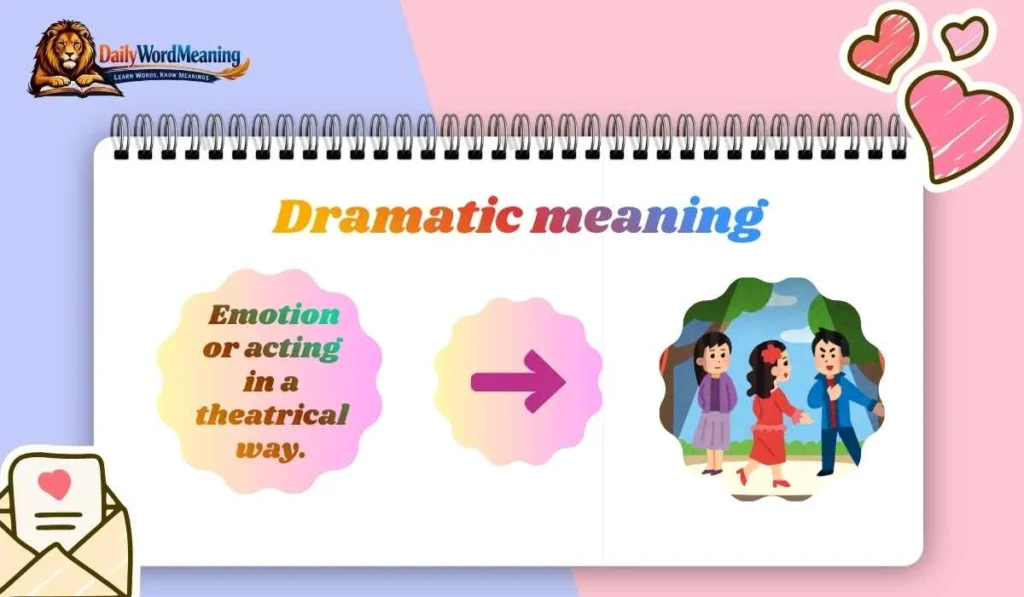
The word dramatic originates from the Latin dramaticus and Greek dramatikos, relating to plays and theatrical performances. Traditionally, it describes someone or something full of emotion or acting in a theatrical way.
In modern texting and chat culture, “dramatic” usually refers to:
- Exaggerated behavior: Overreacting about small situations.
- Emotional intensity: Showing strong emotions, either seriously or jokingly.
- Attention-seeking actions: Trying to get a reaction or entertain others.
Example:
Friend 1: “He said he might be late by 5 minutes.”
Friend 2: “Wow, so dramatic 😅”
Here, Friend 2 is pointing out that Friend 1 is overreacting, in a lighthearted way.
How to Use “Dramatic” in Texts or Chat
Using dramatic correctly in messages can make your chats more expressive and relatable. Here’s how you can apply it:
- Reacting to someone overreacting: “You’re crying because your favorite show ended? So dramatic 😂”
- Describing yourself humorously: “I might be dramatic, but I need three pillows to sleep properly 😭”
- Commenting on online posts: “Her outfit reveal is dramatic and I love it!”
Pro Tip: Pair dramatic with emojis like 😅, 😂, or 😭 to convey that your comment is playful rather than critical.
Examples of “Dramatic” in Conversations
Seeing real examples can help you understand the dramatic meaning in everyday chat:
- Casual conversation: “I can’t believe he didn’t text back! So dramatic 🙄”
- Group chat exaggeration: “We have 2 minutes left and she’s already panicking—dramatic much?”
- Social media comment: “This TikTok transition was so dramatic, I had to watch it twice 😆”
Notice how context changes the tone: it can be teasing, funny, or slightly judgmental.
Common Mistakes or Misunderstandings
Even though dramatic is simple, people often misuse it. Common errors include:
- Using it too seriously: Saying someone is dramatic as an insult in a sensitive situation may hurt feelings.
- Confusing it with “serious”: Dramatic doesn’t mean serious; it means exaggerated.
- Overusing the word: If every reaction is “dramatic,” it loses its impact.
Example of misuse:
“You lost your keys? That’s so dramatic!”
In this case, the person may actually be in distress, so it might come off as insensitive.
Related Slangs or Abbreviations
If you’re exploring texting language, there are similar words and abbreviations that capture the same vibe as dramatic:
- Extra – Acting over-the-top or doing more than necessary. “She’s so extra about her birthday decorations 🎉”
- Over it – Showing frustration at someone being dramatic. “I’m over it, stop being dramatic 🙄”
- Mood – Can imply relatability to a dramatic situation. “Watching him cry over that scene… mood 😭”
- LOL / LMAO – Often used to soften the teasing tone when calling something dramatic.
Using these slangs alongside dramatic can make your chats more engaging and modern.
Conclusion:
In modern texting and online conversations, understanding the dramatic meaning is more than just knowing a dictionary definition.
It’s about reading the vibe, context, and tone to respond appropriately. Whether it’s a friend overreacting, a funny TikTok video, or a group chat meltdown, dramatic lets you describe exaggerated behaviors in a playful, relatable way.
Remember: use it wisely, pair it with emojis when teasing, and don’t confuse exaggeration with seriousness. Knowing this can make your online interactions smoother and more fun.

I am Zaho Lusi, and I am a meaning author.
I write simple, clear, and easy-to-understand meanings to help readers learn new words without confusion. My main focus is making language simple so that everyone—students, beginners, and curious learners—can understand words quickly and easily.