Updated 2026 – In today’s fast-paced world of texting and online chats, we often encounter words that aren’t part of everyday conversation. One such term is “apoplexy.”
While it might sound like something only doctors use, understanding what it means can help you better interpret literature, news, or even a dramatic online comment.
Let’s dive into the apoplexy meaning and explore how it’s relevant today.
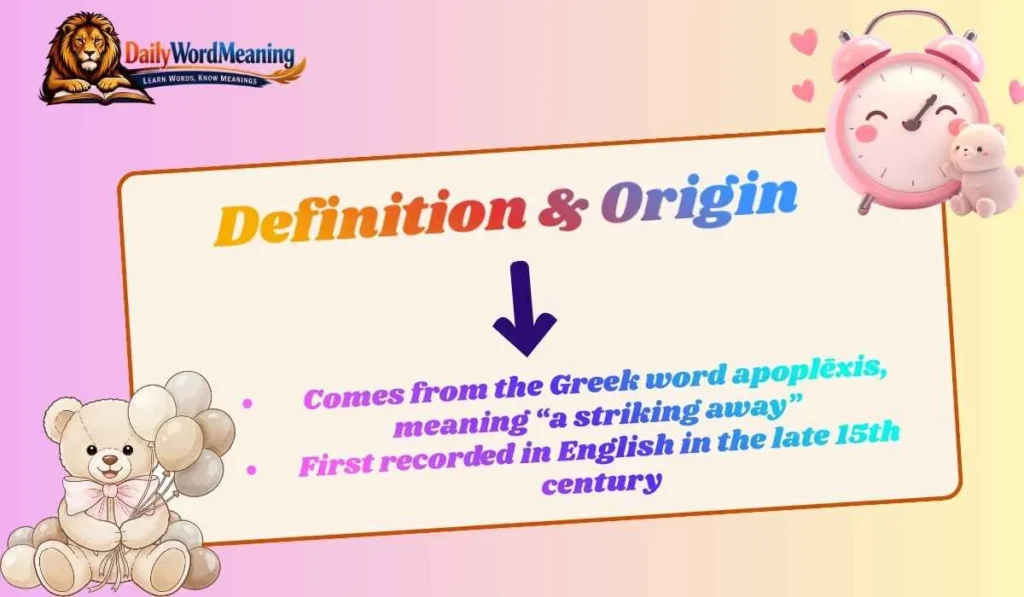
What Does “Apoplexy” Mean? Definition & Origin:
At its core, apoplexy refers to a sudden medical event, typically a stroke or a sudden loss of consciousness due to internal bleeding or blockage in the brain. Historically, it was used in medical texts to describe a rapid, often fatal, physical collapse.
Origin:
- Comes from the Greek word apoplēxis, meaning “a striking away”
- First recorded in English in the late 15th century
- Traditionally used in medical literature but has slowly made its way into figurative language
In modern conversation, especially online, apoplexy is often used metaphorically to describe someone experiencing extreme anger or shock. For example:
“She went into apoplexy when she saw her phone battery die at 2%.”
This figurative usage is where most casual readers might encounter it today.
How to Use “Apoplexy” in Texts or Chat
Even though apoplexy is a formal word, it can be adapted in casual texting or social media to emphasize strong reactions. Here’s how:
- Highlight extreme emotions: Use it to describe over-the-top frustration or anger.
- Example: “He went into apoplexy when someone ate his leftover pizza 😅.”
- Add humor: Pairing the term with emojis makes it relatable and funny.
- Example: “Mom saw my report card… total apoplexy mode activated 🤯.”
- In writing or threads: Perfect for dramatic storytelling online.
- Example: “The boss saw the missing files and went into pure apoplexy.”
💡 Pro Tip: While it adds flair, avoid overusing it—most people will understand it best in context where a strong reaction is expected.
Examples of “Apoplexy” in Conversations
Here are some real-life style examples of how apoplexy can appear in texts or chats:
- Text with friend:
- Friend: “I accidentally deleted your group chat!”
- You: “You caused apoplexy in my brain 😤”
- Social media comment:
- “Watching him try to parallel park… pure apoplexy!”
- Forum post:
- “Reading the news about the surprise exam results had me in apoplexy.”
These examples show how versatile the word can be beyond strict medical use.
Common Mistakes or Misunderstandings
Using apoplexy incorrectly can confuse readers. Here are some pitfalls:
- Medical vs. figurative usage: Not everyone will understand the metaphorical sense. Stick to contexts with strong emotions.
- Overcomplicating texts: Using it in casual one-liners without context may seem pretentious.
- Pronunciation & spelling: Often mispronounced as “a-po-plexy” (correct: AP-uh-plek-see).
✅ Correct usage tip: Pair apoplexy with context clues like anger, shock, or surprise to make it clear.
Related Slangs or Abbreviations
If you’re a fan of modern texting language, here are some related ways to express extreme reactions:
- Rage quit – leaving a game or chat out of anger
- FML – shorthand for “F*** my life,” often paired with shocking events
- SMH – “shaking my head” in disbelief
- [Insert emoji] – 🤯 or 😡 to visually show apoplexy-like reactions
By blending formal words like apoplexy with casual abbreviations, your texts and posts can feel witty and expressive.
Why Knowing “Apoplexy” Matters
Understanding the apoplexy meaning isn’t just about expanding your vocabulary—it helps you:
- Decode older literature or news articles
- Interpret dramatic online commentary accurately
- Add flair to your own writing and chats
- Avoid miscommunication in formal and casual contexts
💡 Fun Insight: Even though it sounds intimidating, apoplexy can be a playful way to exaggerate reactions in texts or memes.
Conclusion:
The word apoplexy may have roots in medical history, but it’s found a second life in modern expression.
Whether you’re reading a dramatic novel, reacting to shocking news, or spicing up your chat messages, knowing its meaning can make your communication sharper and more expressive.
Remember: use it thoughtfully, pair it with context or emojis, and don’t be afraid to add a touch of humor.

I am Zaho Lusi, and I am a meaning author.
I write simple, clear, and easy-to-understand meanings to help readers learn new words without confusion. My main focus is making language simple so that everyone—students, beginners, and curious learners—can understand words quickly and easily.