In today’s fast-paced digital world, texting and online chatting are the main ways we communicate.
From Instagram DMs to Discord servers, understanding modern abbreviations can save you from awkward misunderstandings.
One abbreviation that’s been popping up everywhere is CW. But what does CW mean exactly, and how do you use it correctly? Let’s dive in and decode this popular internet slang, updated for 2026!
What Does “CW” Mean? Definition & Origin:
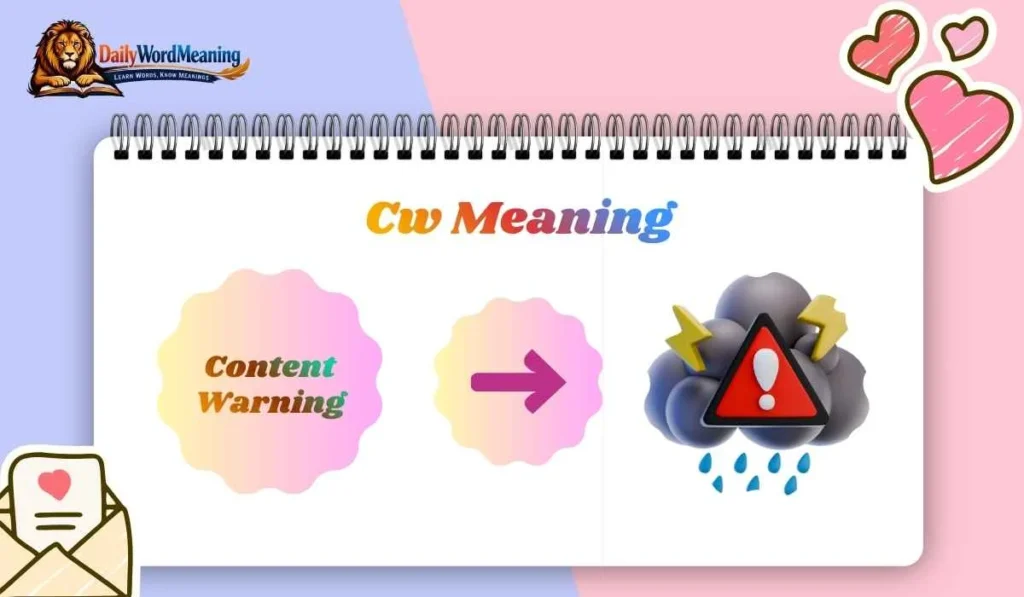
CW is an abbreviation that can have multiple meanings depending on the context, but in online chats, it’s most commonly used as “Content Warning.”
A content warning (CW) is a way to alert readers or viewers that the content that follows may include sensitive topics like:
- Violence
- Sexual content
- Mental health triggers
- Controversial opinions
By adding CW at the start of a post, tweet, or message, the sender gives readers a heads-up so they can choose whether or not to engage.
Origin of CW
The abbreviation CW became popular on platforms like Tumblr, Twitter/X, and Reddit, where communities discuss sensitive topics openly. Its purpose is to promote respect and emotional safety online. While it might seem like modern slang, the idea of content warnings dates back decades in media and literature, but online abbreviations made it quicker and easier to use.
How to Use “CW” in Texts or Chat
Using CW correctly is all about context and placement. Here’s how you can include it in your messages:
- Before the sensitive content: Always place CW at the start of your post or paragraph.
- Example:
CW: Discussion about anxiety triggers ahead
- Example:
- Optional details: You can specify the type of content to be warned about.
- Example:
CW: Graphic violence in the next paragraph
- Example:
- Platforms: Commonly used on:
- Twitter/X threads
- Tumblr posts
- Reddit discussions
- Discord channels
- Private text messages
💡 Pro Tip: Adding CW shows empathy and awareness—it’s a simple way to respect your audience.
Examples of “CW” in Conversations
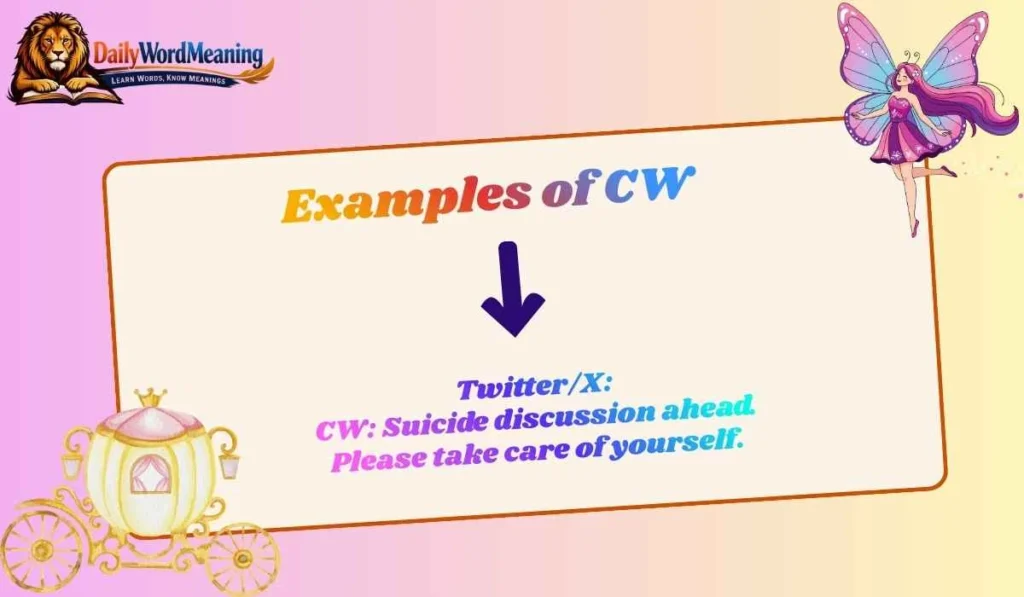
Seeing CW in action can help you understand its practical usage. Here are some real-life examples:
- Twitter/X:
CW: Suicide discussion ahead. Please take care of yourself. - Tumblr:
CW: Mentions of sexual assault in this post - Discord Chat:
CW: Gore content in the video link below. - Text Messaging:
Hey, just a heads-up, CW: Talks about animal abuse in this article.
Notice how in each example, the CW is clear, concise, and immediately informs the reader.
Common Mistakes or Misunderstandings
Even popular abbreviations can be misused. Here’s what to watch out for with CW:
- Using it incorrectly as “Clockwise” in serious posts: While CW can also mean “clockwise,” this is usually in casual conversation or technical discussions, not in content warnings.
- Placing CW at the end of a post: It should always be at the start, otherwise readers might miss it.
- Not specifying the trigger: Simply writing CW without any context might confuse readers. Add a short descriptor.
- Overusing it: Only use CW when necessary—overusing it can make readers ignore it.
✅ Correct usage: CW: Graphic violence in next scene
❌ Incorrect usage: There’s graphic violence CW
Related Slangs or Abbreviations
When you’re navigating the world of online chat, CW often appears alongside other abbreviations. Some related terms include:
- TW (Trigger Warning): Very similar to CW; often interchangeable.
- NSFW (Not Safe for Work): Used for content that’s inappropriate for workplace viewing.
- SFW (Safe for Work): Marks content as appropriate for any audience.
- ICYMI (In Case You Missed It): Often paired with CW to catch attention while warning.
- FYP (For You Page): On TikTok, CW can appear in captions to warn viewers on their feed.
Understanding these abbreviations together makes chatting online smoother and prevents accidental offense.
Why Using CW Matters
Adding CW to your posts isn’t just trendy—it’s responsible digital etiquette. Here’s why it matters:
- Protects readers’ mental health: People may want to avoid content that triggers anxiety or trauma.
- Shows empathy: Using CW indicates you respect your audience’s emotional space.
- Avoids backlash: On social media, failing to warn users about sensitive content can lead to criticism or negative comments.
- Builds trust: Communities are more likely to engage with you if they feel safe reading your posts.
💬 Fun fact: Many popular content creators now include CW in nearly every sensitive post, making it an expected standard.
Updated Usage Tips for 2026
Social media trends change fast, but CW remains relevant in 2026. Here are updated tips for using it effectively:
- Combine with hashtags for reach:
- Example:
CW: Anxiety talk ahead #MentalHealthAwareness #CW
- Example:
- Use emojis for quick visual cues:
- Example:
⚠️ CW: Violence in next clip ⚠️
- Example:
- Pair with platform-specific etiquette:
- On TikTok, place CW at the start of captions.
- On Instagram, add CW in your story sticker text.
- Keep it short and clear: Avoid lengthy explanations in the warning; one short phrase works best.
Conclusion:
Understanding CW meaning is essential for anyone navigating modern texting and social media. It’s more than just an abbreviation—it’s a way to show respect, care, and awareness for your audience.
By using CW correctly, you can protect your readers from sensitive content, build trust, and avoid misunderstandings online.
Whether you’re posting on Twitter/X, sharing a Tumblr story, or chatting in Discord, CW should be your go-to abbreviation for content warnings.

Alex Carry is a passionate content writer and language researcher at DailyWordMeaning, dedicated to explaining modern words, slang, and internet terms in simple English.With a strong interest in digital culture and everyday language, Alex turns confusing meanings into clear, reader-friendly explanations.