n today’s digital world, communication isn’t just about words—it’s about emotion. That’s where the emotive meaning of a word or phrase comes into play.
Whether you’re texting a friend, posting on social media, or writing a blog, the way your message makes someone feel can be just as important as what it actually says.
Understanding emotive meaning is essential for anyone who wants to communicate clearly and effectively online.
Misreading a message or using the wrong word can lead to confusion, awkwardness, or even accidental offense.
Updated for 2026, this guide will break down everything you need to know about emotive meaning, how it works, and how you can use it in your chats, texts, and posts.
What Does “Emotive Meaning” Mean? Definition & Origin:
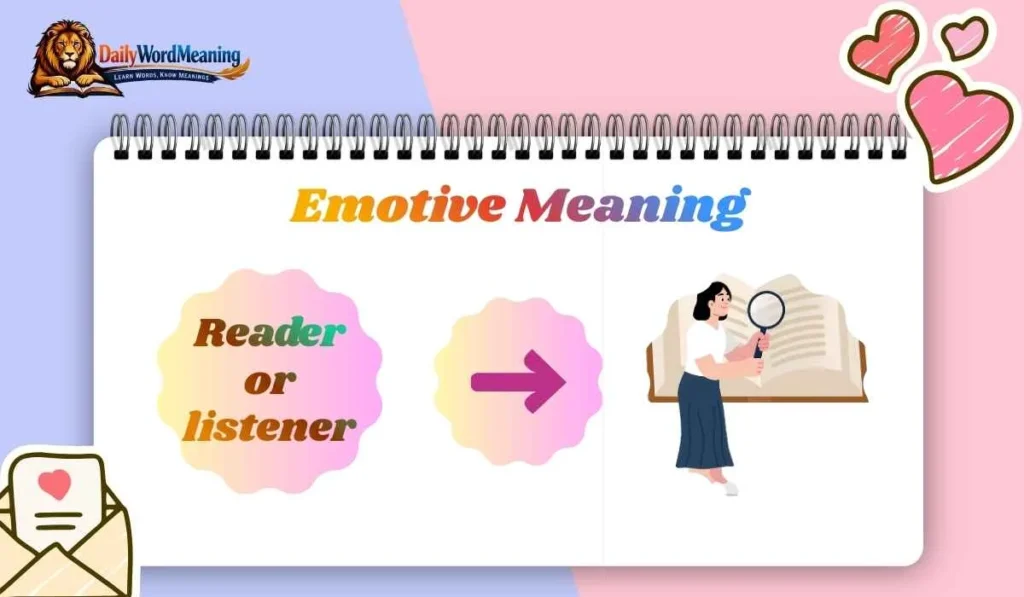
Simply put, emotive meaning is the emotional impact a word or phrase has on the reader or listener. Unlike literal meaning (also called denotative meaning), which explains what a word objectively means, emotive meaning focuses on the feelings it evokes.
Origin
The concept comes from linguistics and communication studies, where researchers noticed that words carry emotional weight beyond their dictionary definitions. For example:
- The word “home” doesn’t just mean a building; it evokes warmth, safety, and comfort.
- Saying “cheap” can feel negative, while “affordable” conveys a positive, approachable vibe—even though both refer to low cost.
In texting and online communication, understanding emotive meaning helps you convey tone and mood, which can be tricky without face-to-face cues like facial expressions or voice.
How to Use “Emotive Meaning” in Texts or Chat
When you’re texting, messaging, or posting online, using words with the right emotive meaning can make your message resonate more with your audience. Here’s how to do it effectively:
- Choose words carefully
- Instead of “I’m fine,” try “I’m okay” or “I’m really happy” depending on the vibe you want to give. Words carry subtle emotional cues.
- Add context
- Emojis, punctuation, and GIFs help reinforce emotive meaning. For example:
- “I’m fine 😅” conveys nervousness or irony.
- “I’m fine ❤️” conveys warmth and reassurance.
- Emojis, punctuation, and GIFs help reinforce emotive meaning. For example:
- Consider the audience
- Use casual emotive language with friends or social media followers.
- Stick to neutral or professional phrasing in work chats or formal posts.
- Be consistent
- Repeating words with positive emotive meaning strengthens your message.
- Avoid mixing conflicting tones, like “I’m thrilled 😢.” It confuses the reader.
Examples of “Emotive Meaning” in Conversations
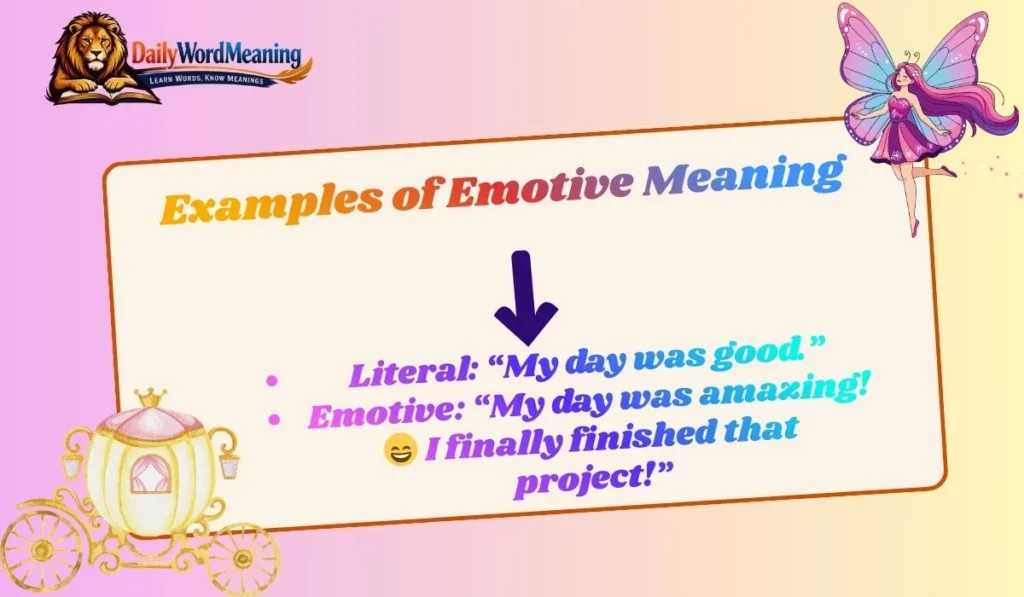
Let’s look at some real-life texting and chat scenarios where emotive meaning matters:
- Scenario 1 – Friend asking about your day:
- Literal: “My day was good.”
- Emotive: “My day was amazing! 😄 I finally finished that project!”
- Scenario 2 – Responding to bad news:
- Literal: “That’s unfortunate.”
- Emotive: “I’m so sorry to hear that 😢 I hope things get better soon.”
- Scenario 3 – Social media post:
- Literal: “I got a promotion at work.”
- Emotive: “I can’t stop smiling 😁 Just got promoted! Feeling so grateful ❤️”
Notice how adding emotive cues like emojis or emotionally-charged words transforms a plain statement into a message that feels alive and personal.
Common Mistakes or Misunderstandings
Even seasoned texters sometimes misuse emotive meaning. Here are some pitfalls to watch out for:
- Overloading emotions
- “I’m so happy I could cry 😂😭😍” – Mixing too many emotional cues can confuse the reader.
- Wrong emotive tone for context
- Using cheerful words in serious contexts can appear insensitive. Example: “Congrats on your loss 😅” is clearly inappropriate.
- Ignoring audience perception
- Some words may have different emotive meanings in different cultures or online communities. “Sick” can mean “awesome” in Gen Z slang but still literally means “ill.”
- Over-reliance on emojis
- Emojis enhance emotive meaning, but too many can clutter your message and dilute the emotion.
Related Slangs or Abbreviations
In texting, emotive meaning often comes with modern slang or abbreviations:
- LOL (Laugh Out Loud) – Conveys amusement.
- SMH (Shaking My Head) – Expresses disappointment or disbelief.
- BRB (Be Right Back) – Neutral, but timing or tone can convey urgency or casualness.
- Mood / Big Mood – Indicates strong emotional resonance with something.
- FOMO (Fear of Missing Out) – Carries anxious or excited emotion depending on context.
Using these correctly can amplify your message’s emotive meaning without needing long explanations.
Practical Tips for Mastering Emotive Meaning
- Read between the lines
- Always think about how your words will feel to the reader.
- Use tone indicators
- Especially useful in online forums:
/sfor sarcasm,/jfor joking,/lhfor lighthearted.
- Especially useful in online forums:
- Practice empathy
- Imagine how someone else would react to your words before sending.
- Observe online trends
- TikTok, Instagram, and Discord are full of modern examples of emotive language. Updated 2026, these platforms show how language evolves constantly.
- Mix words and visuals
- Emojis, GIFs, and even punctuation reinforce your emotional intent.
Why Emotive Meaning Matters in 2026
In the age of AI-generated content, social media, and global communication, emotive meaning is more important than ever. Messages that are technically correct but lack emotional resonance are often ignored or misunderstood.
- Brands: Use emotive language to connect with audiences authentically.
- Content creators: Emotional impact keeps readers engaged.
- Everyday texters: Prevent misunderstandings and build better relationships.
By mastering emotive meaning, you not only improve your communication but also create messages that people remember and feel.
Conclusion:
Understanding emotive meaning isn’t just about picking the right words—it’s about connecting with others on an emotional level. By considering the feelings your words evoke,
using modern slang and abbreviations correctly, and adding subtle cues like emojis,
you can communicate more effectively in texts, chats, and online posts.
Remember, emotive meaning can make a plain “I’m fine” feel warm, sympathetic, or even hilarious depending on how you express it.
Updated for 2026, mastering this skill ensures your messages resonate in today’s fast-paced digital world.

I am Zaho Lusi, and I am a meaning author.
I write simple, clear, and easy-to-understand meanings to help readers learn new words without confusion. My main focus is making language simple so that everyone—students, beginners, and curious learners—can understand words quickly and easily.