In today’s fast-paced texting world, abbreviations and phrases often carry more weight than their literal meanings. One such phrase that has stood the test of time is “eye for an eye.”
But what does it really mean, and how do people use it in conversations, chats, or social media today? Understanding this phrase isn’t just about knowing the dictionary definition—it’s about recognizing the context, tone, and cultural relevance behind it.
Whether you’re scrolling through memes, texting friends, or commenting online, knowing the eye for an eye meaning can make your messages sharper, clearer, and more relatable.
What Does “Eye for an Eye” Mean? Definition & Origin:
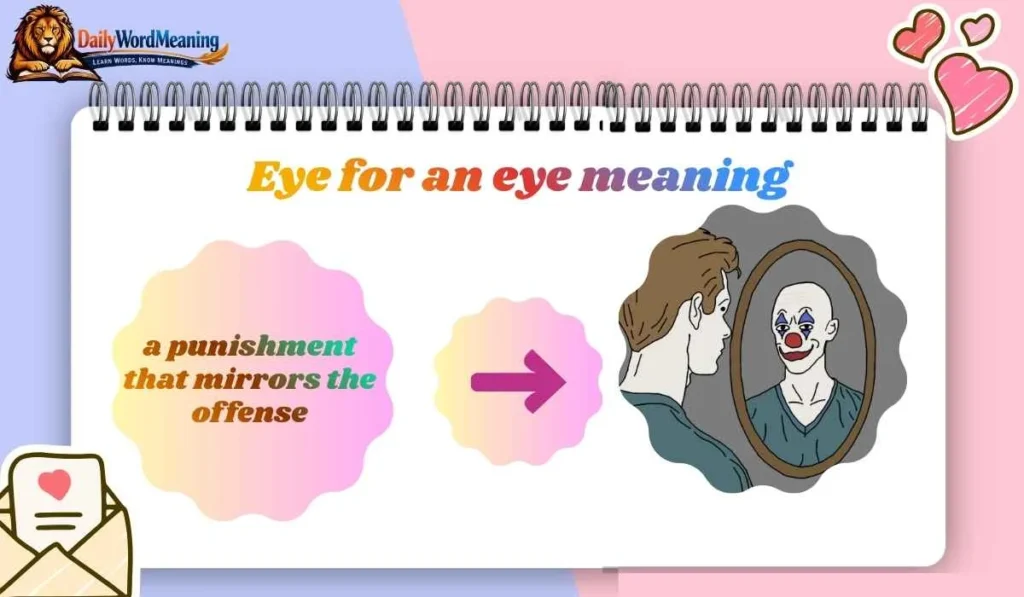
The phrase “eye for an eye” originates from ancient legal codes, most famously the Code of Hammurabi, one of the oldest written laws in history. It essentially means “a punishment that mirrors the offense”—if someone harms you, the punishment should be equal to the harm caused.
Key Points:
- Literal Meaning: If someone takes an eye, they lose an eye.
- Figurative Meaning: Revenge or retribution should be fair and proportional.
- Modern Use: In today’s texting and social media culture, it often refers to getting back at someone in a playful, sarcastic, or even serious way.
Fun Fact: While the phrase sounds strict, it’s more about fairness than cruelty. Many people use it metaphorically in texts rather than literally.
How to Use “Eye for an Eye” in Texts or Chat
Understanding when and how to use this phrase is key. Here’s how you can naturally include it in your digital conversations:
- Expressing Revenge (Lighthearted or Serious)
- Example: “You pranked me? Don’t worry… eye for an eye 😏”
This works in playful texts with friends or even social media captions.
- Example: “You pranked me? Don’t worry… eye for an eye 😏”
- Calling Out Unfairness
- Example: “They deleted my post? That’s an eye for an eye situation right there.”
Perfect for online discussions about fairness or justice.
- Example: “They deleted my post? That’s an eye for an eye situation right there.”
- Sarcasm or Humor
- Example: “You ate my pizza? Eye for an eye, buddy!”
Here, the phrase adds a humorous tone rather than a serious threat.
- Example: “You ate my pizza? Eye for an eye, buddy!”
Pro Tip: Use emojis like 👁️, 😏, or ⚡ to make the phrase more expressive in casual chats.
Examples of “Eye for an Eye” in Conversations
Here are some relatable scenarios where this phrase can appear in texts or online:
- Friend Prank Scenario:
- Alex: “I hid your headphones!”
- Jamie: “Haha, eye for an eye! Wait until you see what I do next 😎”
- Social Media Example:
- Caption: “Someone took my parking spot… eye for an eye 🚗💥 #PettyRevenge”
- Online Forum Discussion:
- User1: “They ghosted me first.”
- User2: “Classic eye for an eye strategy—hit them back with the same energy.”
These examples show that the phrase is versatile, working for humor, commentary, or expressing fairness in digital interactions.
Common Mistakes or Misunderstandings
Even though “eye for an eye” is widely recognized, people sometimes misuse it. Here’s what to watch out for:
- Mistake 1: Taking it too literally
- Avoid using it in serious situations where it could sound threatening. It’s mostly figurative in modern chats.
- Mistake 2: Overusing the phrase
- Repeating it too often can make your messages sound petty or sarcastic rather than clever.
- Mistake 3: Misinterpreting it as unconditional revenge
- The original meaning is proportional justice, not unlimited retaliation.
By understanding these nuances, your use of the phrase will feel authentic and intelligent, not forced.
Related Slangs or Abbreviations
Here are some phrases or slang terms often used similarly in modern texting:
- “What goes around comes around” – Similar meaning, more casual.
- “Payback time” – Playful or revenge-driven.
- “BOOM, roasted” – Sarcastic retaliation in a humorous way.
- “Mutual destruction” – Exaggerated version, often in memes.
Pro Tip: Pairing eye for an eye with these modern phrases can make your texts feel more contemporary and relatable.
Practical Tips for Using “Eye for an Eye”
To make sure your use of this phrase lands well:
- Know Your Audience: Use humor with friends, seriousness with peers online, and avoid sensitive contexts.
- Add Context: Emojis, gifs, or follow-up messages help convey tone.
- Stay Trendy: Memes and social media references keep the phrase fresh in digital culture.
- Keep it Balanced: One-liners work better than long paragraphs for chat messages.
Conclusion:
The “eye for an eye meaning” has evolved from ancient law to a playful, relatable phrase in modern texting and social media. It’s all about proportional responses, fairness, and sometimes, humor.
By understanding its origins, correct usage, and common pitfalls, you can confidently use it in chats, texts, or online posts.
Next time someone teases you, pranks you, or plays a little trick, you can drop “eye for an eye” with perfect timing—and maybe a wink emoji 😏 for good measure.

Alex Carry is a passionate content writer and language researcher at DailyWordMeaning, dedicated to explaining modern words, slang, and internet terms in simple English.With a strong interest in digital culture and everyday language, Alex turns confusing meanings into clear, reader-friendly explanations.