In today’s fast-paced texting and social media world, abbreviations and slang terms can make or break your conversation.
One word that keeps popping up in chats, social media posts, and even memes is “saga.” But what does it really mean? 🤔
Whether you’re scrolling through Twitter, DMing a friend, or reacting to a TikTok story, understanding the meaning of “saga” can help you communicate better and even sound trendy.
Updated for 2026, this guide breaks it down with examples, tips, and common pitfalls so you never misinterpret a saga again.
What Does “Saga” Mean? Definition & Origin:
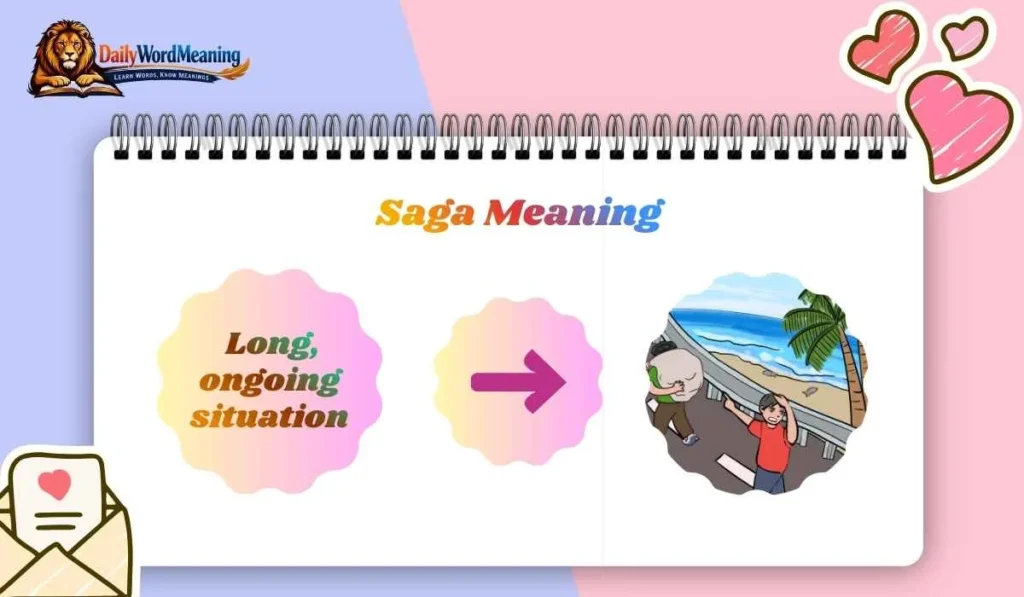
At its core, a “saga” is a long story, often involving drama, events, or a sequence of notable incidents. Originally, the term comes from Old Norse literature, where sagas were epic tales about heroic deeds, family histories, or legendary adventures. Think of Viking stories that span generations! ⚔️
In modern texting and online slang, “saga” is used more casually to describe:
- A dramatic sequence of events in someone’s life.
- A series of messages or posts that tell a story.
- Any long, ongoing situation that seems entertaining, chaotic, or noteworthy.
Example:
“Have you seen Jenna’s saga on Instagram? It’s been three posts in a row about her cat escaping again!”
So in chats, “saga” isn’t about Vikings (usually), it’s about the drama, humor, or chaos in a sequence of events.
How to Use “Saga” in Texts or Chat
Using “saga” correctly can make your texts fun, relatable, and culturally on-point. Here’s how to do it:
- Commenting on Ongoing Stories:
- “This saga with my neighbor’s dog won’t end 😩”
- Highlighting Drama:
- “The group chat saga about the canceled trip is wild!”
- Reacting to Long Threads:
- “I can’t even catch up with your saga on TikTok 😂”
💡 Pro Tip: You can combine it with emojis to add humor or emphasis, like 📖 for “story” or 🤯 for “mind-blowing drama.”
Examples of “Saga” in Conversations
Seeing the word in context is the best way to understand it. Here are a few scenarios:
Texting with Friends:
A: “Did you finish telling them what happened at the party?”
B: “It’s a saga… honestly, you’d need popcorn 🍿”
Social Media Post:
“My saga with online shopping continues: ordered shoes last week, got socks instead 🤦♀️ #OnlineShoppingFails”
Group Chat Drama:
“Can we all agree that the saga of our weekend plans is officially cursed?”
Notice how “saga” adds a sense of ongoing storytelling, humor, or dramatic flair.
Common Mistakes or Misunderstandings
Even trending slang can be confusing! Here’s what to avoid:
- Using it for short or trivial events:
❌ “I ate a sandwich today, total saga.”
✅ “Trying to plan a surprise party turned into a saga.” - Mixing it with unrelated words:
- Keep it about stories, events, or sequences, not random feelings.
- Overusing it:
- A few sagas in your text/chat are fun; too many can make your messages feel repetitive or forced.
Related Slangs or Abbreviations
If you love “saga,” you might also enjoy using:
- Drama: Often interchangeable with saga in casual chats.
- FYP (For You Page): When referring to stories trending online.
- Thread: Usually on Twitter/X, describing a connected series of tweets.
- Epic Fail: Highlights a story with dramatic or funny mishaps.
- Storytime: Commonly used when someone shares a saga on social media.
Example:
“Storytime: The saga of my cat and the missing socks continues 🧦😂”
Why Knowing the Meaning of “Saga” Matters
Understanding saga helps you:
- Keep up with trending social media content.
- Communicate more clearly in chats without sounding outdated.
- Add humor, relatability, and personality to your texts.
- Avoid misinterpretations that could confuse your friends.
Updated for 2026, “saga” remains relevant across platforms like Instagram, TikTok, WhatsApp, and even professional chat apps where storytelling can lighten the mood.
Conclusion:
The word “saga” has traveled from Viking epics to TikTok threads, evolving into a fun, dramatic way to describe a sequence of events.
Whether you’re laughing at a friend’s group chat drama or sharing your own epic fails, knowing how to use saga correctly can make your texts more engaging and relatable.
Remember: it’s about storytelling, drama, and humor, not just any minor incident.
Use it in moderation, pair it with emojis for flair, and you’ll be the go-to person for calling out sagas in your friend group.

I am Zaho Lusi, and I am a meaning author.
I write simple, clear, and easy-to-understand meanings to help readers learn new words without confusion. My main focus is making language simple so that everyone—students, beginners, and curious learners—can understand words quickly and easily.